Testing Laboratories

New Jersey Cannabis Testing Laboratory Accounting

New Jersey's licensed testing laboratories provide potency, pesticide, heavy-metal and microbial analysis for cultivators, manufacturers and dispensaries and never take ownership of cannabis product, which materially narrows their 280E exposure compared to plant-touching licensees. Labs serving the Trenton and Princeton corridors still need precise equipment cost accounting and sample-volume revenue tracking to run a defensible testing operation.

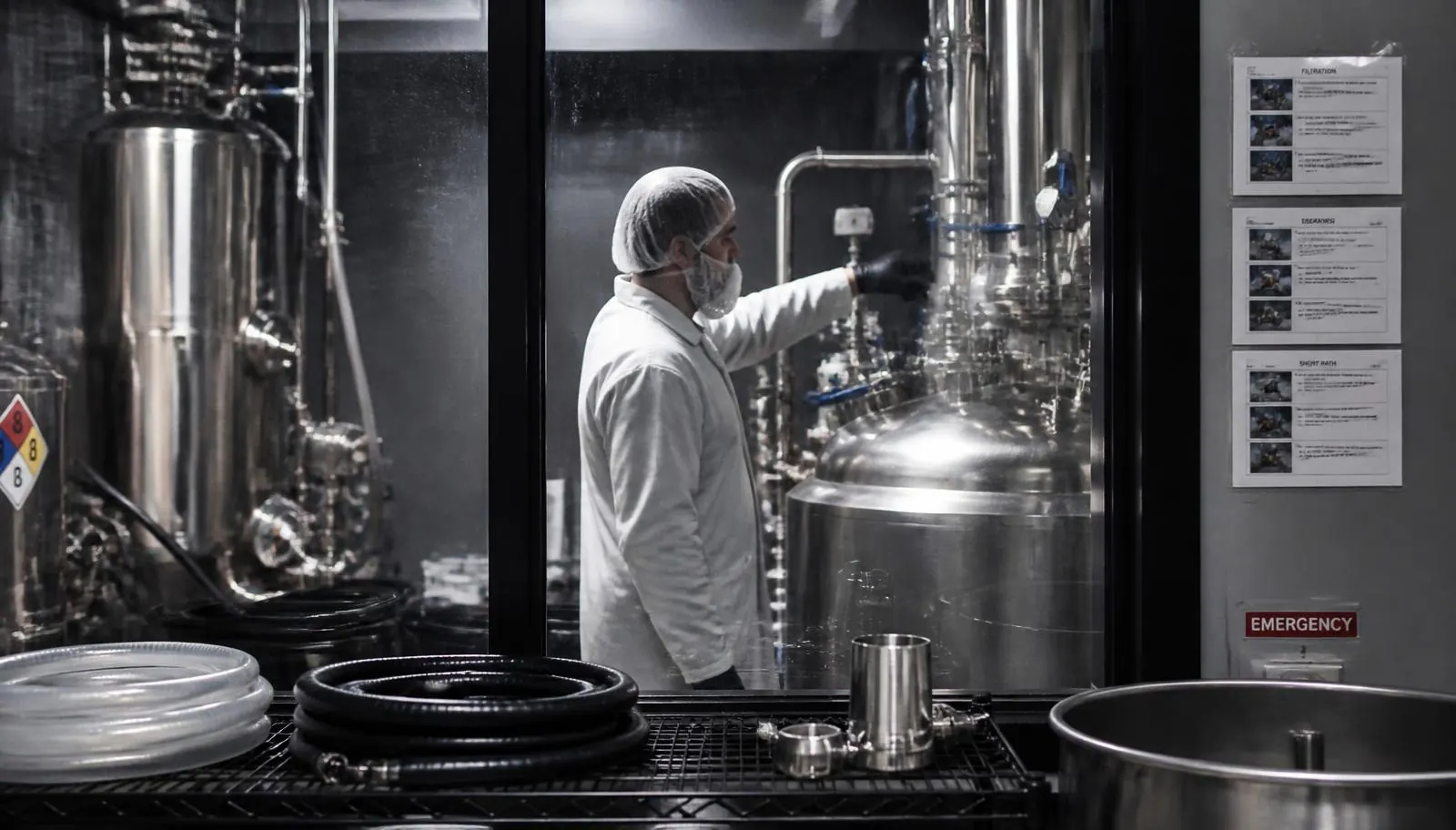
New Jersey cannabis manufacturing and extraction facility with stainless steel processing equipment behind clean-room glass

Financial challenges specific to this license type

  • Limited 280E exposure but real substantiation burden

    Because a lab sells testing services rather than cannabis product, its 280E exposure is generally narrower, largely limited to any period it handles cannabis samples on a fee basis. Nonetheless, the CRC and IRS both expect careful documentation distinguishing testing service revenue from any incidental handling of product.

  • Capital-intensive equipment depreciation and calibration cost

    HPLC, GC-MS and other analytical instruments represent significant capital investment requiring correct depreciation scheduling, and calibration and maintenance contracts must be tracked to support both financial reporting and ISO/IEC 17025 accreditation cost recovery.

  • Sample chain-of-custody and Metrc data entry accuracy

    Every sample tested must be logged into Metrc with results attached to the source batch, and billing needs to reconcile sample counts and turnaround-time service levels to client invoicing without lag.

  • Client concentration and receivables risk across licensees

    Labs often serve a limited number of licensed New Jersey cultivators and manufacturers, creating client concentration risk; disciplined accounts receivable aging and credit policy are important given the working-capital constraints common across the plant-touching side of the industry.

How we work with testing laboratories

  • Establish capital equipment depreciation schedules aligned to instrument useful life
  • Reconcile Metrc sample logging and test results to service billing records
  • Track accreditation, calibration and proficiency testing costs distinctly from overhead
  • Monitor client concentration and receivables aging across licensee customers
  • Confirm 280E treatment reflects the lab's non-plant-touching service model

280E scope and substantiation for testing labs

Licensed New Jersey testing laboratories provide potency, pesticide, heavy-metal and microbial analysis services and generally do not take ownership of cannabis product, which narrows their 280E exposure relative to plant-touching cultivators, manufacturers and dispensaries. Because a lab sells a testing service rather than cannabis itself, most of its expenses, including equipment depreciation, chemist payroll and accreditation costs, are typically deductible in the ordinary course.

Even with this narrower exposure, documentation distinguishing testing service revenue from any incidental sample handling matters, particularly since CRC and IRS reviewers apply the same producer-versus-service-provider framework from CHAMP when evaluating a lab's federal tax position.

Equipment depreciation, sample tracking and Metrc entry

Analytical instruments such as HPLC and GC-MS systems represent substantial capital investment, and correct depreciation scheduling alongside tracked calibration and maintenance contracts is essential for both financial reporting and cost recovery through client billing. ISO/IEC 17025 accreditation and proficiency testing costs should be tracked in their own accounts rather than blended into general lab overhead.

Every sample received must be logged into Metrc with results attached to the source batch, and billing systems need to reconcile sample counts and turnaround-time service levels against client invoicing without lag, since delayed reconciliation quickly obscures whether a testing contract is actually profitable.

  • Depreciation schedules aligned to instrument useful life and calibration cycles
  • Sample intake logged to Metrc and reconciled to service billing
  • Accreditation and proficiency testing costs tracked separately from overhead

New Jersey tax planning for laboratory operations

Because most lab expenses are already deductible federally given the narrower 280E scope, New Jersey's decoupling under P.L. 2023, c.50 typically has less impact for a testing laboratory than for a plant-touching licensee, though state Corporation Business Tax filings should still confirm the lab's non-plant-touching classification is properly documented and consistently applied.

We build the accounting system first and let the tax return follow it. If you operate a licensed New Jersey testing laboratory, a diagnostic review will quantify what your current treatment is costing you before any engagement begins.

Services most relevant to this operator profile

Questions

Testing Laboratories accounting questions

Consultation

Speak with a New Jersey cannabis CPA

Bring your license types, current books and open deadlines. We will tell you what needs to happen first and in what order.